What to Know Before Buying a Home in El Cajon, CA: The Complete 2026 Buyer’s Guide
Reading time: 14 minutes
Thinking about buying a home in El Cajon? You’re looking at one of San Diego County’s most dynamic and underrated real estate markets — a city that blends affordable pricing (relative to coastal San Diego), strong community roots, and genuine long-term appreciation potential. But diving in without a roadmap? That’s where buyers get burned.
Whether you’re a first-time buyer relocating from out of state or a seasoned investor eyeing the Inland Empire spillover effect, El Cajon in 2026 demands a sharp, informed approach. Let’s cut through the noise and get you exactly what you need to make a confident, well-timed purchase.
Table of Contents
- El Cajon Real Estate Market Overview in 2026
- Neighborhoods Worth Knowing
- Home Prices, Trends, and What to Expect
- Financing Your El Cajon Home
- Common Buying Challenges and How to Overcome Them
- Local Factors Every Buyer Should Evaluate
- Frequently Asked Questions
- Your El Cajon Homeownership Roadmap
El Cajon Real Estate Market Overview in 2026
El Cajon sits roughly 14 miles east of downtown San Diego in the heart of a sprawling valley — and its real estate market reflects that in-between identity perfectly. It’s not coastal San Diego (thank your budget for that), but it’s not the deep Inland Empire either. In 2026, the city of approximately 108,000 residents continues to attract buyers priced out of La Mesa, El Cajon’s neighboring cities, and even San Diego proper.
After the sharp rate corrections of 2023 and 2024, the Southern California housing market found a new equilibrium heading into 2025 and 2026. El Cajon specifically has seen inventory levels stabilize, with the average days-on-market hovering around 28–35 days as of early 2026 — still a seller’s market by historical standards, but far less frenzied than the 2021–2022 peak years.
“El Cajon is experiencing what we’d call a ‘rational market.’ Buyers have more negotiating room than they’ve had in five years, but well-priced properties in desirable pockets are still moving fast.” — Local San Diego County real estate analyst, Q1 2026
Key market dynamics shaping El Cajon in 2026 include:
- Mortgage rates: 30-year fixed rates have settled in the 6.2%–6.8% range as of mid-2026, creating a more normalized (if still elevated) lending environment
- Inventory: Active listings have increased roughly 18% year-over-year compared to 2025, giving buyers more options
- Migration patterns: Continued inflow from higher-cost California metros, particularly Los Angeles County
- New development: Several mixed-use and infill projects approved in downtown El Cajon are adding housing stock gradually
Neighborhoods Worth Knowing
El Cajon isn’t monolithic. Different neighborhoods carry very different price points, vibes, and investment trajectories. Here’s what every buyer needs to understand before narrowing down a search area.
North El Cajon and Fletcher Hills
If you ask longtime locals where they’d buy, Fletcher Hills comes up repeatedly. Technically a community within El Cajon’s sphere of influence (with a Lakeside mailing address in some sections), Fletcher Hills offers hillside homes with valley views, larger lot sizes averaging 7,000–10,000 sq ft, and proximity to Cuyamaca College. Median home prices here trend about 8–12% above central El Cajon, typically ranging from $680,000–$820,000 for single-family homes in 2026.
North El Cajon near the Magnolia Avenue corridor has seen notable revitalization investment since 2023. Community development grants and private investment have improved the commercial streetscape, and that’s quietly lifting residential values in the surrounding blocks.
Downtown El Cajon and Central District
Downtown El Cajon is the city’s beating heart — and it’s undergone meaningful transformation. The East County Performing Arts Center, the weekly Farmers Market, and a cluster of locally owned restaurants have made downtown feel more walkable and livable. Entry-level condos and townhomes in the downtown core start around $380,000–$480,000, making this one of the more accessible price points in San Diego County for attached housing.
Single-family homes in the central district — typically 3-bed, 1–2 bath post-war construction — have been selling in the $550,000–$700,000 range in 2026. Many of these homes were built in the 1950s–1970s, which means buyers should budget carefully for deferred maintenance and systems upgrades.
Rancho San Diego and Crest
On the southeastern edge of El Cajon’s broader market area, Rancho San Diego offers newer construction (1980s–2000s builds), master-planned community amenities, and a more suburban feel. It’s popular with families for its proximity to well-regarded schools and larger home footprints. Prices here range from $720,000–$950,000 for a standard single-family home in 2026. Crest, an unincorporated rural community nearby, appeals to buyers seeking acreage and privacy at a relative premium.
Home Prices, Trends, and What to Expect
Let’s get specific. Here’s a comparative snapshot of what your dollar buys across different property types and neighborhoods in El Cajon as of mid-2026:
| Property Type / Area | Median Price (2026) | YoY Change | Avg Days on Market | Buyer Competition Level |
|---|---|---|---|---|
| SFR – Central El Cajon | $618,000 | +4.2% | 30 days | Moderate-High |
| SFR – Fletcher Hills / North | $742,000 | +5.8% | 22 days | High |
| Condo / Townhome | $428,000 | +2.9% | 38 days | Moderate |
| SFR – Rancho San Diego | $835,000 | +3.4% | 26 days | High |
| Multi-Family (2–4 units) | $920,000 | +6.1% | 45 days | Moderate |
*Data compiled from San Diego County Assessor records, MLS aggregates, and regional brokerage reports, Q2 2026
Price Appreciation Comparison: El Cajon vs. Surrounding Cities
Understanding how El Cajon stacks up against neighboring markets helps contextualize whether you’re getting relative value. Here’s a visual breakdown of approximate 5-year price appreciation (2021–2026) for key East County cities:
5-Year Home Price Appreciation (2021–2026)
+38%
+44%
+41%
+36%
+34%
The takeaway? El Cajon’s appreciation has been solid but slightly below La Mesa and Santee — which actually positions it as a relative value play with continued upside. Buyers who missed the La Mesa wave are increasingly looking east toward El Cajon.
Financing Your El Cajon Home
Getting your financing right is arguably more important than finding the right property. In 2026’s lending environment, your mortgage strategy can save — or cost — you tens of thousands of dollars over the life of a loan.
Loan Programs Particularly Relevant for El Cajon Buyers
FHA Loans: With El Cajon’s median single-family price around $618,000 for central areas, FHA loans (requiring as little as 3.5% down) remain highly relevant for first-time buyers. The 2026 FHA loan limit for San Diego County sits at $1,006,250, meaning most El Cajon properties fall comfortably within FHA eligibility.
CalHFA Programs: California’s Housing Finance Agency continues to offer down payment assistance in 2026. The MyHome Assistance Program and the Dream For All Shared Appreciation Loan (relaunched with modifications in 2025) can meaningfully reduce the cash-to-close burden. Given that a 5% down payment on a $618,000 home equals $30,900 — before closing costs — these programs deserve serious investigation.
VA Loans: El Cajon’s proximity to Marine Corps Air Station Miramar, Naval Base San Diego, and other installations makes VA loans particularly relevant here. The veteran population in East County is substantial, and VA loans with zero down payment and no PMI remain one of the strongest financing tools available.
Conventional Conforming Loans: The 2026 conforming loan limit stands at $806,500 for San Diego County — covering most El Cajon purchases. Buyers with 20% down avoid PMI and often access the most competitive rate tiers.
Pro Tip: In today’s rate environment, ask lenders about temporary buydown programs (2-1 buydowns, for example), which some motivated sellers are still willing to fund as a concession. This can meaningfully lower your effective rate in years one and two while you settle in.
Common Buying Challenges and How to Overcome Them
Let’s be direct about the friction points. Every El Cajon buyer encounters at least one of these challenges — knowing they’re coming is half the battle.
Challenge 1: Competing in a Constrained Inventory Market
Even with inventory up 18% year-over-year, El Cajon still sees fierce competition for well-priced, move-in-ready single-family homes. Quick Scenario: Imagine you find a 3-bed, 2-bath home in Fletcher Hills listed at $729,000. It’s been on market for four days. By the time your agent schedules a showing and you draft an offer, there are already three competing bids.
How do you compete without overpaying?
- Get fully underwritten pre-approval (not just pre-qualified) before making any offers — this signals serious buyer capacity to sellers
- Write a clean offer — minimal contingencies where you’re comfortable, or use strategic contingency waivers selectively
- Escalation clauses: In active bidding situations, escalation clauses allow your offer to automatically beat competing bids up to a set ceiling
- Work with a locally connected agent who may have off-market or pre-market intelligence on upcoming listings
Challenge 2: Older Housing Stock and Deferred Maintenance
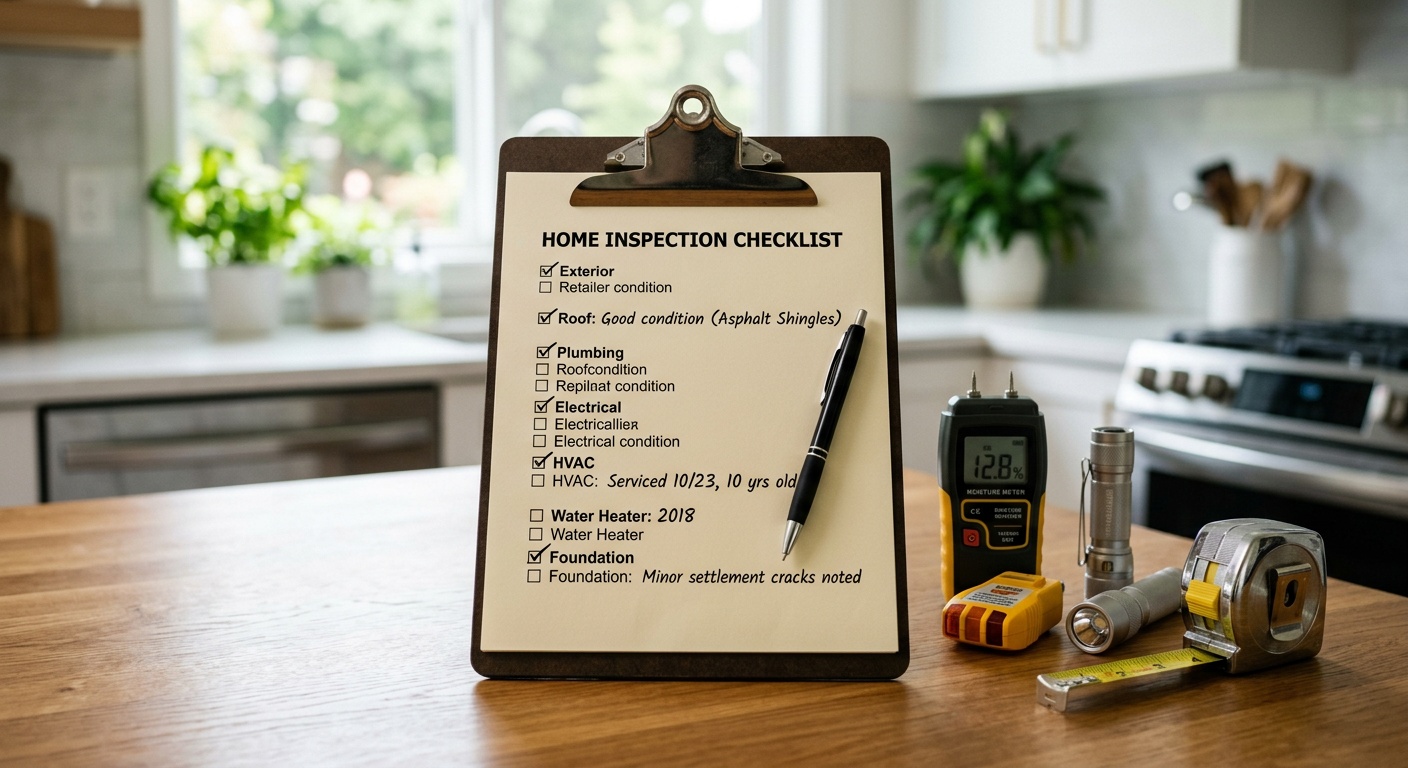
A significant portion of El Cajon’s single-family inventory was built between 1945 and 1985. That’s not inherently a problem — but it requires eyes-open due diligence. Common issues inspectors flag in this era of construction include:
- Original galvanized or cast-iron plumbing approaching end of life
- Outdated electrical panels (Federal Pacific or Zinsco panels are red flags)
- Composition shingle roofs nearing the 20-25 year replacement threshold
- Uninsulated or poorly insulated attic spaces (significant in a valley climate with hot summers)
- Asbestos-containing materials in floor tiles, insulation, or popcorn ceilings (pre-1980 construction)
Case Study: A couple relocating from Los Angeles in early 2025 purchased a 1962-built home in central El Cajon for $589,000, thrilled to be under budget. Post-close, they discovered the main sewer line needed full replacement ($9,200), the HVAC system was at end of life ($7,400 replacement), and the electrical panel required upgrade to accommodate their EV charger ($3,800). Their total “surprise” spend in year one: $20,400. The lesson? Budget 1–2% of purchase price annually for maintenance on older stock, and always invest in a comprehensive inspection including sewer scope.
Challenge 3: Navigating HOA Complexity
Many El Cajon condos, townhomes, and some planned single-family communities carry HOA obligations. Before falling in love with a property, scrutinize the HOA thoroughly:
- Request the last 12 months of meeting minutes — look for undisclosed litigation, major deferred repairs, or reserve fund shortfalls
- Review the reserve study: a well-funded HOA has reserves at 70%+ of fully funded status
- Understand special assessment history — have there been unexpected levies on owners in recent years?
- Check HOA rules for rental restrictions, pet policies, and modification approvals if you plan any renovations
Local Factors Every Buyer Should Evaluate
Beyond price per square foot, El Cajon has specific local considerations that meaningfully affect quality of life and resale value.
Climate and Wildfire Risk
El Cajon’s inland valley location means hot, dry summers — July and August regularly see temperatures in the 95°F–105°F range. More critically, the region is in a moderate-to-high wildfire risk zone. Properties on the eastern hillsides and near open space carry elevated fire risk. In 2026, California’s FAIR Plan insurance remains a backstop option, but premiums have risen significantly. Buyers should obtain insurance quotes before closing — some El Cajon properties are seeing annual fire insurance premiums of $3,500–$6,000+ for hillside or brush-adjacent locations.
Schools and District Performance
El Cajon falls within the Cajon Valley Union School District (elementary/middle) and the Grossmont Union High School District. School performance varies noticeably by specific school. Buyers with school-age children should research individual school scores on the California School Dashboard and verify attendance boundaries for specific addresses — boundaries don’t always align with neighborhood assumptions.
Commute Patterns
If you’re working in coastal San Diego, Kearny Mesa, or downtown, factor in commute reality. Interstate 8 is the primary artery connecting El Cajon westward, and westbound morning commutes can extend to 45–65 minutes during peak hours. The MTS trolley Green Line extends to El Cajon Transit Center, offering a car-free alternative for downtown-bound commuters — a meaningful quality-of-life and cost consideration.
Community Diversity and Amenities
El Cajon is home to one of the largest Chaldean and Iraqi immigrant communities in the United States, which has created a vibrant, culturally rich commercial landscape — exceptional Middle Eastern restaurants, markets, and community institutions. This cultural diversity is genuinely one of El Cajon’s most underappreciated assets. For outdoor enthusiasts, proximity to Cuyamaca Rancho State Park, Lake Jennings, and regional hiking trails adds significant lifestyle value.
Frequently Asked Questions
Is El Cajon a good place to buy a home in 2026?
Yes, for the right buyer profile. El Cajon offers meaningful relative affordability compared to coastal San Diego, solid long-term appreciation fundamentals, improving community amenities, and diverse neighborhood options. It’s particularly compelling for first-time buyers, military families, and investors seeking cash-flowing rental properties. The key caveats are wildfire insurance costs for hillside properties and the importance of thorough inspection on older housing stock. Buyers who do their homework and engage local professionals tend to find strong value here in 2026.
How much do I need for a down payment to buy in El Cajon?
It depends on your loan type and goals. FHA loans require 3.5% down (approximately $21,600 on a $618,000 home), while conventional loans start at 3–5% but require PMI below 20% equity. With CalHFA assistance programs, some buyers have closed with as little as 0–3% out of pocket. VA-eligible buyers can purchase with zero down. Beyond the down payment, budget 2–3% of the purchase price for closing costs (title, escrow, lender fees, prepaid items). A $618,000 purchase might require $12,000–$18,000 in closing costs on top of your down payment.
What neighborhoods in El Cajon are best for first-time buyers?
Central El Cajon and the downtown corridor offer the most accessible entry price points, with condos and townhomes starting around $380,000–$430,000. For those stretching toward a single-family home, the central district’s post-war bungalows in the $550,000–$630,000 range represent attainable targets. Fletcher Hills commands a premium but offers stronger appreciation history and a more established neighborhood feel. First-time buyers should work with an agent who specializes specifically in El Cajon and East County to identify emerging micro-markets where value hasn’t fully been priced in yet.
Your El Cajon Homeownership Roadmap: Next Steps That Matter
You’ve absorbed the landscape. Now let’s turn knowledge into action. Here’s a practical, sequenced roadmap for the next 60–90 days of your El Cajon home buying journey:
- Get financially prepped (Week 1–2): Pull your credit reports, resolve any errors, and meet with at least two lenders — including a local credit union and a mortgage broker who can access multiple programs. Explore CalHFA eligibility and VA loan status if applicable. Know your real number: pre-approval, not just pre-qualification.
- Define your non-negotiables (Week 2–3): Distinguish between must-haves (bedrooms, garage, school district) and nice-to-haves (pool, remodeled kitchen). This clarity prevents emotional decision-making in competitive offer situations.
- Hire the right local agent (Week 3): Interview two or three agents who specialize in East County and have closed transactions in El Cajon in the past 12 months. Ask for their list-to-sale price ratio and average days-on-market for their represented buyers.
- Research insurance costs upfront (Week 3–4): For any property you get serious about, obtain insurance quotes before making an offer. Wildfire risk, age of home, and prior claims history can make a property uninsurable or prohibitively expensive to insure — better to know early.
- Build your inspection team (Before First Offer): Identify a general home inspector, a sewer scope specialist, and a structural engineer contact. In a competitive market, you may have only 7–10 days for due diligence — having your team ready is a competitive advantage.
El Cajon’s housing market in 2026 rewards buyers who combine strategic preparation with genuine local knowledge. The inland valley is no longer a “discount consolation prize” for buyers who couldn’t afford the coast — it’s an established, appreciating market with its own compelling identity.
The broader trend is clear: as Southern California’s coastal markets remain structurally supply-constrained, well-located inland communities like El Cajon will continue attracting buyers seeking quality of life, community, and real estate fundamentals that make long-term financial sense.
Here’s the question to sit with: In five years, will you wish you had bought in El Cajon in 2026 — or will you be grateful you took the time to prepare properly and buy with confidence? The research you do today is the equity you build tomorrow. What’s your first move?